RANGAMATI, Sept 08 (V7N) — The Bangladesh Army has launched a 14-day technical training programme aimed at equipping unemployed young people in the remote hill tracts with practical skills and creating opportunities for self-employment.
The initiative is being viewed as a positive step towards addressing unemployment and strengthening the socio-economic capacity of local communities in the region.
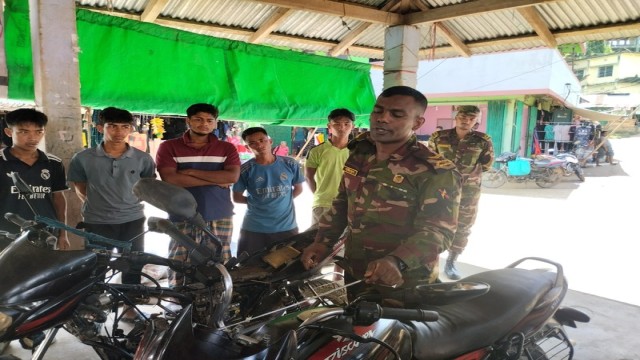
Under the overall supervision of the Rangamati Region, the Jurachhari Zone Headquarters (2 Bir) has launched a two-week machine repair training programme to enhance the technical skills of local residents and create opportunities for self-employment.
The training began on September 6 and will continue until September 17. A total of 22 participants from different parts of Jurachhari Upazila, representing both indigenous and Bengali communities, are taking part in the programme.
Participants are receiving hands-on training in the basic operation of machines and various tools, identification of common faults, routine maintenance and practical repair techniques.
Upon completing the training, the participants will not only be able to repair machinery and equipment for their own needs but may also have opportunities to earn an income by providing machine repair services within their local communities.
According to people familiar with the initiative, many young people in the hill regions have educational qualifications but face limited employment opportunities. Difficult transportation networks and other practical challenges often make it difficult for them to travel to distant cities for jobs or vocational training.
Against this backdrop, providing hands-on technical training locally could open up new opportunities for young people in remote areas.
Practical skills such as machine and equipment repair can enable unemployed young people to pursue small-scale self-employment rather than relying solely on conventional job opportunities. At the same time, providing such services locally could help meet community demand and potentially create employment opportunities for others.
Those involved in the initiative view the Army's programme as an effective step towards developing skills and promoting self-reliance among local communities.
They believe that equipping people with practical skills over the long term can generate benefits that extend beyond individuals to their families and the wider local economy.
The training, organised by the Jurachhari Zone Headquarters (2 Bir) under the overall supervision of the Rangamati Region, is primarily aimed at providing participants with practical technical skills and enabling them to create their own employment opportunities in the future.
The authorities concerned said such public welfare and skills development programmes would continue in the future with the aim of improving local skills, creating employment opportunities and strengthening the socio-economic capacity of communities.
At a time when employment opportunities remain limited in many remote areas of the hill tracts, initiatives that provide unemployed young people with practical skills could offer new hope for their future.
The effort to turn skills into employment and employment into greater self-reliance for communities in the hill regions is being seen as a significant and positive initiative.
END/AMR/SMA/