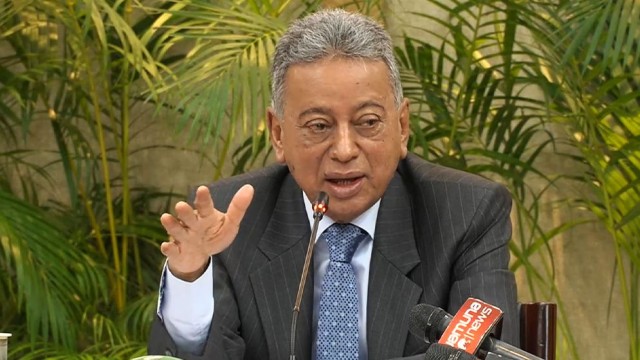
Dhaka, Nov 29 (V7N)- Finance Minister Amir Khasru Mahmud Chowdhury has said that rising international prices of oil, gas and other essential commodities are placing significant financial pressure on Bangladesh's economy, with imported inflation adding to domestic economic challenges.
He said the government had to purchase fuel and other products from international markets at prices two to three times higher, putting a heavy strain on the national treasury.
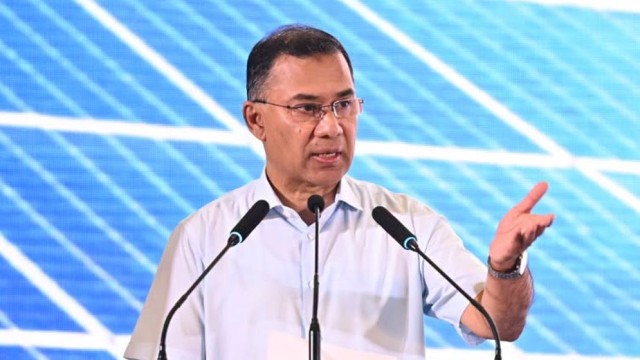
The Finance Minister made the remarks at a workshop titled 'Strategic Framework Reform and Development' on Sunday (November 29).
He said every time the government purchased a consignment of oil or gas, it had to spend a substantial amount of additional money because of higher global prices.
"We are buying each lot of oil and each lot of gas at double or triple the price. This is causing a huge bleeding in the treasury. Every purchase is causing a huge bleeding," he said.
Amir Khasru said the country was currently at a stage of economic recovery, but rising prices of various products, including oil, gas and fertiliser, were affecting the economy.
"We are bringing inflation through imports. I have no control over this," he said.
He added that the impact of rising global prices of fuel and other commodities would continue to affect the country's economy for some time, potentially slowing economic growth.
Speaking about the banking sector, the Finance Minister said it might take until next year for the sector to return to normal. However, he assured depositors that they would get their money back.
He blamed managerial weaknesses for the increase in defaulted loans and described the banking sector as having been severely damaged. He also said the capital market had long been operating like a casino.
State Minister for Planning Jonayed Saki said at the workshop that although various development plans had been adopted in the past, they had not been properly implemented. He said the current government would give equal importance to planning and implementation.
The workshop was informed that the government had moved away from the conventional five-year planning system and developed a new strategic framework based on five pillars. The framework aims to advance economic and institutional reforms and increase the tax-to-GDP ratio.
Participants said managerial weaknesses and irregularities had contributed to the rise in non-performing loans in the banking sector. They said efforts would be made to stabilise the economy over the next three years, expressing hope that the economy would recover afterwards.
Speakers stressed that preparing a plan or framework alone would not be sufficient unless its effective implementation was ensured. Referring to the five-year plans adopted during the tenure of the former Sheikh Hasina government, they said those plans had not been implemented properly and urged the authorities to avoid repeating past failures while carrying out the new strategic framework.
END/SMA/AJ