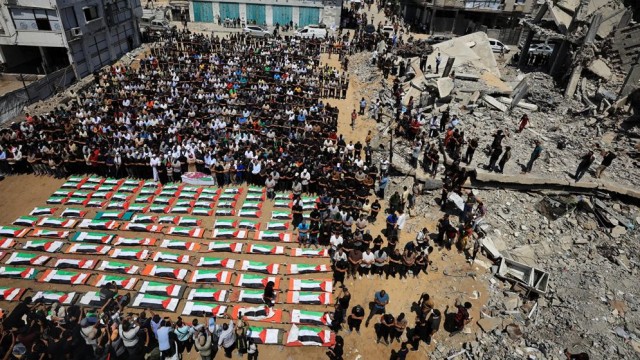
Gaza, Aug 05 (V7N)- After being buried under the rubble of a residential building destroyed by Israeli airstrikes for nearly two years, the bodies of several Palestinian family members were finally recovered and buried on Tuesday.
The remains were retrieved from the ruins of a residential building in Gaza City that was destroyed in an Israeli airstrike in November 2023. The recovery and burial ceremony became one of the largest mass funerals since the beginning of the ongoing war in Gaza.
Palestinian families said at least 157 more bodies are believed to remain trapped under the rubble at the same site.
The war began on October 7, 2023, after a Hamas-led attack on Israel prompted a large-scale Israeli military operation in Gaza. Since then, recovering bodies from destroyed buildings has remained extremely difficult due to widespread destruction and restrictions on rescue operations.
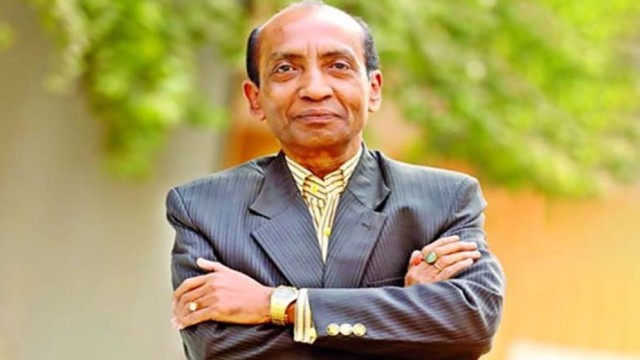
Ahmad Alhendawi, Regional Director for the Middle East, North Africa and Eastern Europe at Save the Children, described the situation as deeply painful.
“Families and relatives of many children and adults are finally able to bury their loved ones,” he said, adding that no family should have to endure the suffering of being unable to recover and bury their children.
Alhendawi said restrictions on rescue teams have delayed the recovery of bodies. He claimed that heavy machinery, specialized equipment and forensic support needed for locating and identifying victims have faced limitations.
He called for the removal of restrictions to allow families to recover, identify and mourn their relatives, while also urging an end to airstrikes in Gaza.
Children have been among the worst affected by the conflict. Gaza health authorities and international organizations have reported large numbers of child casualties, injuries and displacement since the war began.
A United Nations inquiry has also highlighted the severe impact of the conflict on children, including physical and psychological trauma, loss of family members, displacement, disabilities, hunger, and disruption of education and healthcare services.
For many families in Gaza, the impact of the war is not only reflected in casualty figures but also in the loss of entire family and social networks.
Maisha Youssef, a mother of four and artist from central Gaza, said the war had destroyed her children's social lives, with many of their friends and teachers killed.
She said children are growing up surrounded by repeated losses and are struggling to understand the scale of destruction around them.
Many children in Gaza are also taking on responsibilities normally carried out by adults, including collecting water and waiting in long lines for food supplies to help their families survive.
Dr. Jida Alhakim, a counseling psychologist at City St George’s University in London, said such situations force children to assume adult responsibilities prematurely, a phenomenon known in psychology as “parentification.”
However, she said the situation in Gaza is unique because it is driven by the collapse of basic infrastructure rather than family circumstances. She also highlighted the resilience of many children, saying cultural values such as patience and perseverance help some children find meaning even during extreme hardship.
The bodies recovered on Tuesday, including those of 40 children, came from one of hundreds of damaged sites across Gaza that have yet to be fully cleared.
Families fear that many more victims remain trapped beneath the rubble.
“We do not want to accept this reality, but today we feel that we are just numbers,” Maisha Youssef said, expressing frustration over the continuing humanitarian crisis and lack of accountability.
END/SMA/AJ